
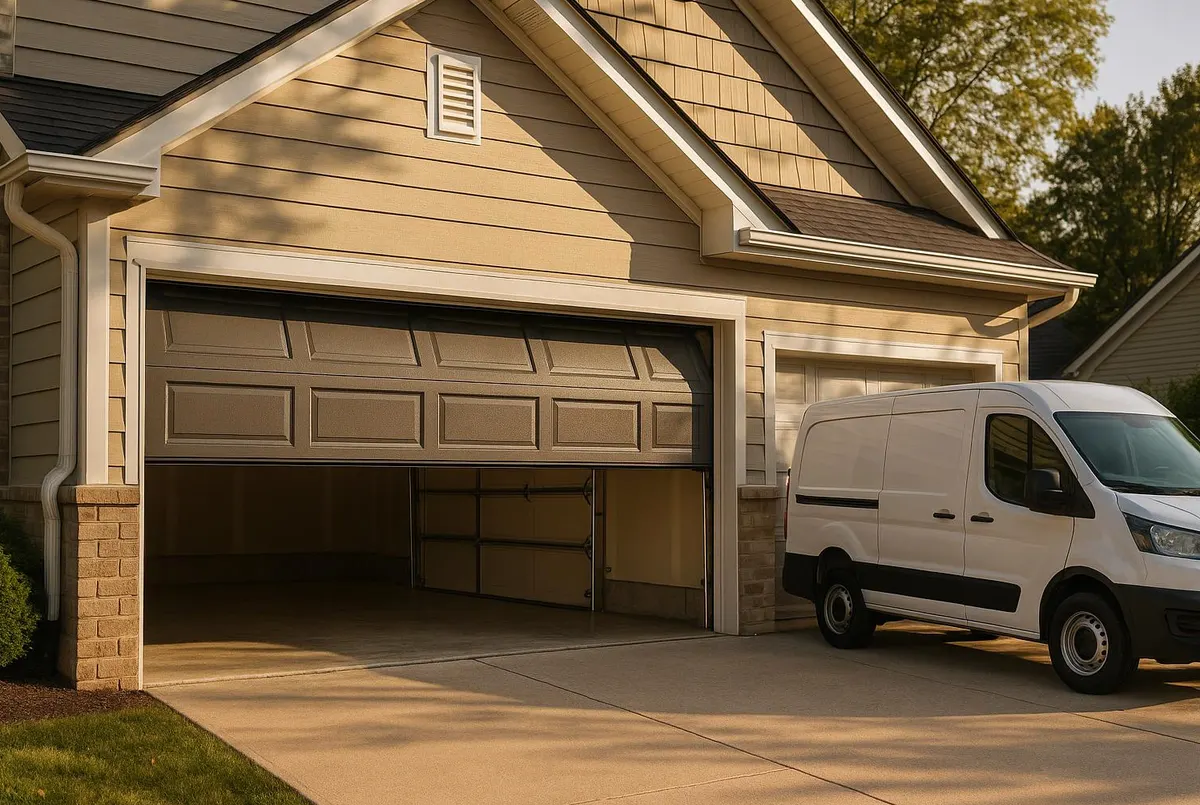
Service your garage door before the first hard freeze, and you'll dodge most of the breakdowns that come with an Ohio winter
That's the rule of thumb. The exceptions matter just as much: if your door is already making noise, sagging on one side, or struggling to open smoothly, don't wait for a seasonal tune-up window. Cold weather doesn't cause most garage door failures so much as it exposes problems that were already brewing. A spring that's lost a little tension, an opener that's been due for a lubrication, or rollers that are already worn will all get noticeably worse the moment temperatures drop into the 20s and 30s.
Why cold hits garage doors harder than most people expect
Garage doors are mechanical systems built from steel, nylon, and tensioned metal coils, and every one of those materials behaves differently when the mercury drops. Steel panels and tracks contract slightly in the cold, which can turn a minor alignment issue into a door that binds or rubs. Standard lubricants thicken in low temperatures, so hinges and rollers that moved freely in October can start to squeak, stick, or drag by December. Torsion and extension springs also lose a bit of flexibility in the cold, which means the same amount of tension does less work lifting the door - this is a big reason why springs are more likely to snap in winter than any other season.
Battery backups on openers take a real hit too. Cold cuts battery capacity significantly, so a backup that would carry you through a summer power outage might not have enough reserve to open the door during a winter ice storm, right when you need it most.
A practical pre-winter checklist
Most of this takes less than an hour and doesn't require special tools.
- Lubricate the moving parts. Use a silicone-based or lithium-based garage door lubricant - not WD-40, which is a cleaner, not a lubricant - on hinges, rollers, and the torsion spring. Do this before the first deep freeze, since lubricant goes on more evenly above freezing.
- Check the hardware. Vibration loosens bolts and brackets over a full year of operation. Walk the track and tighten anything that's moved. Loose hardware combined with cold-weather stiffness is a common cause of doors that suddenly start running off-track.
- Run a balance test. Disconnect the opener by pulling the release cord, then lift the door manually about halfway. It should stay put on its own. If it drifts down or shoots up, the springs are out of balance and working harder than they should - which raises the odds of a winter spring failure.
- Test the auto-reverse safety feature. Place a block of wood in the door's path and close it. The door should reverse on contact. This matters year-round, but cold-stiffened sensors and springs can make reversal less reliable, so it's worth confirming before winter.
- Inspect and tighten the opener's travel and force settings. A door that's slightly misadjusted in October can start struggling to fully close once cold air changes how the springs and hardware respond.
Ice, salt, and slush: the parts of winter that are specific to this area
Centerville winters bring the full combination of ice, road salt tracked in from driveways, and repeated freeze-thaw cycles, and all three take a toll on a garage door's lower hardware. A few things worth watching through the season:
- Salt residue on the tracks. Melting snow carries salt into the garage and onto the tracks, where it can corrode metal and gum up the rollers' path. Wiping down the tracks periodically during a thaw helps prevent buildup.
- Ice at the base of the door. Slush that drips off a car and refreezes under the door can create a thin ice dam that stops the door from sealing fully or makes it strain against the ground when it tries to close. If you hear the opener laboring at the bottom of its cycle on a cold morning, check for ice before assuming it's a mechanical fault.
- Panel stress from freeze-thaw swings. Ohio's big temperature swings - a 40-degree day followed by a hard freeze overnight - cause repeated expansion and contraction in steel panels. Over several winters this can loosen seams or worsen existing dents, so it's a good season to address minor panel damage rather than let it compound.
Signs you shouldn't wait on
Some symptoms call for attention now rather than at the next scheduled maintenance visit: a door that's visibly uneven when it opens, a loud bang or pop from the spring area, an opener that strains or stalls partway through its cycle, or a battery backup that no longer holds a charge long enough to get the door open once during a test. Any of these can turn into a fully stuck door during the first serious cold snap or ice storm of the season.
When to call Centerville Garage Door
If your balance test fails, the door is making new noises, or you're not comfortable adjusting spring tension or opener settings yourself, that's the point to call in a technician rather than troubleshoot further. Our Garage Door Maintenance visits cover the full lubrication, hardware, and balance checklist above, along with an inspection of the opener's safety features and battery backup before the cold really sets in. If a spring is already showing signs of wear or has lost tension, our Spring Replacement service handles that safely - this is not a job to attempt yourself, since a torsion spring under tension can cause serious injury.
If you're in Centerville, Kettering, Miamisburg, Springboro, Dayton, Beavercreek, West Carrollton, or Bellbrook and want your garage door checked out before winter settles in, give Centerville Garage Door a call. We'll get your door running smoothly and keep it that way through the cold months ahead.