
Rule of Thumb
If your garage door won't open on a cold morning, it's almost always ice at the bottom seal, not a failed motor or a broken spring. The exceptions: if the opener runs but the door doesn't move at all, if you hear grinding or popping before it sticks, or if the door was already struggling before the cold snap hit, the problem is mechanical and ice is just making it worse.
Centerville's winters bring the exact combination that causes this — overnight lows well below freezing, road salt and slush tracked into the driveway, and big day-to-day temperature swings that melt and refreeze moisture right where your door meets the slab.
Symptoms to Watch For
- The door won't lift at all, and the opener motor hums or strains before reversing or stopping.
- The door opens partway, then stops or reverses on its own.
- It moves, but noticeably slower than normal, especially on the first use of the day.
- Loud pops, cracks, or a tearing sound right as the door breaks free — that's often the bottom seal letting go of the ice it's frozen to.
- The remote and keypad work, but the door barely budges or the opener's safety sensors trip repeatedly.
What a Technician Checks, in Order
1. Ice at the Bottom Seal and Threshold
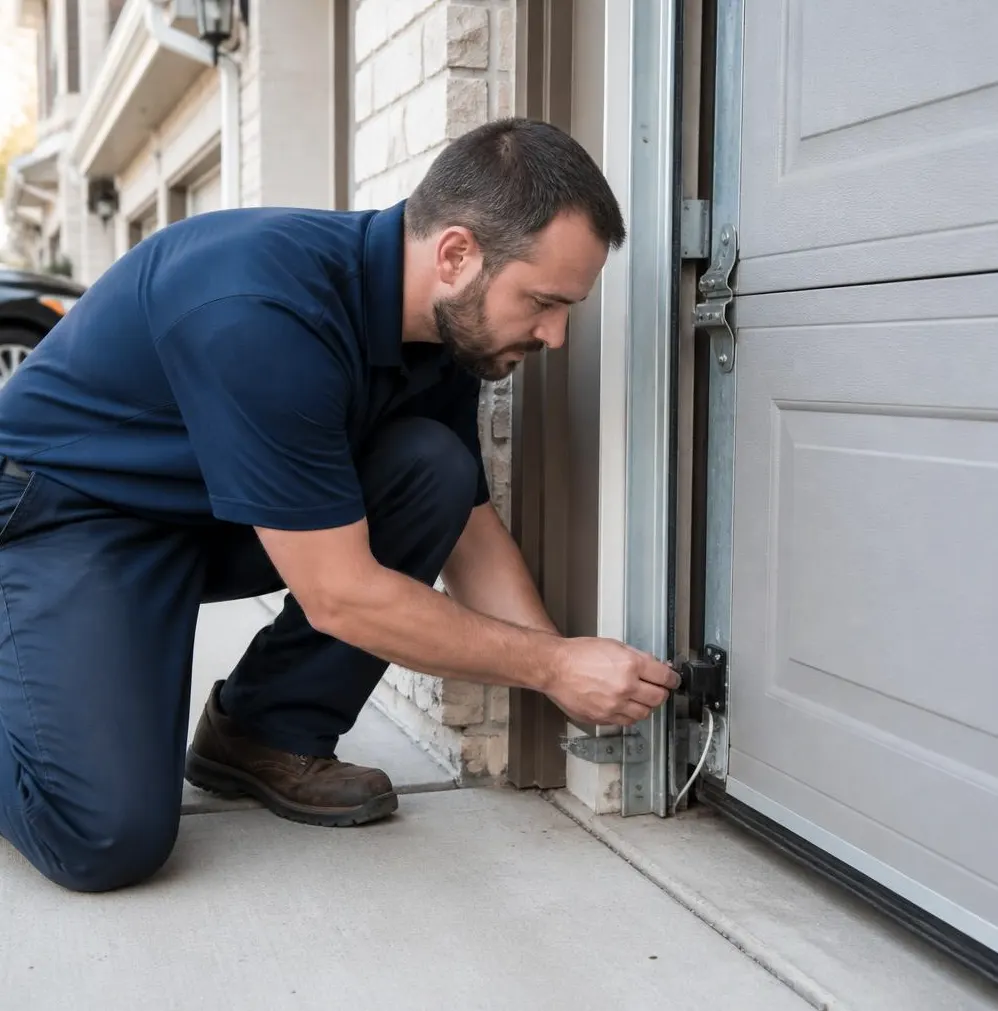
This is the first thing worth ruling out because it's the most common and the easiest to damage if you ignore it. Water collects along the bottom of the door, refreezes overnight, and glues the rubber seal to the concrete. Forcing the opener at this point can tear the seal, strip the drive gear, or bend a track.
The fix: Don't keep hitting the remote. Use a hair dryer or heat gun on low to melt the ice line, or gently chip it away with a plastic scraper — never a metal one, which can gouge the seal. If this happens repeatedly, check whether the driveway apron slopes toward the door instead of away from it; standing water there will keep causing the same problem all winter.
2. Dried-Out or Thickened Lubricant
Grease and oil thicken in cold temperatures, and if the rollers, hinges, and springs haven't been lubricated since last year, that thickened residue adds real resistance right when the door needs the most help moving.
The fix: Clean off old grease buildup and apply a lithium- or silicone-based lubricant rated for cold weather to the rollers, hinges, and springs — not the track itself. This is a basic part of seasonal garage door maintenance and often solves sluggishness on its own.
3. Torsion or Extension Spring Tension
Steel springs contract slightly in cold weather and lose a bit of lifting force, which is why a door that worked fine in October can feel noticeably heavier in January. If the spring was already worn, stretched, or near the end of its lifespan, winter cold is often what pushes it over the edge.
The fix: A technician checks for visible gaps between coils, rust, or an uneven lift (one side rising faster than the other). A tired spring gets replaced, not adjusted — this is not a DIY repair, since these springs hold enough tension to cause serious injury.
4. Opener Force Settings and Internal Gears
Cold affects the opener itself, too. The internal gears can stiffen, and if the force setting is calibrated for a door that moves freely in warm weather, the extra resistance from cold rollers or a stiff seal can trip the opener's safety reverse or cause it to strain and stall.
The fix: A technician inspects the gear condition, adjusts the force and limit settings to match how the door actually performs in winter conditions, and lubricates the opener's internal moving parts if accessible.
5. Track Alignment and Roller Condition
Metal tracks contract slightly in the cold, which can turn a track that was marginally out of alignment in summer into one that binds in winter. Older nylon rollers can also crack or flatten in extreme cold, adding friction or causing the door to catch at the same spot every time.
The fix: Realigning a track takes a few minutes for a technician with the right tools. Cracked rollers get swapped out, ideally for nylon rollers rated for temperature swings, which hold up better through an Ohio winter than older steel or worn nylon.
6. Batteries in the Opener or Keypad
It's the least dramatic cause, but cold drains batteries faster, and a weak battery in a keypad or wall remote can make the door seem sluggish or unresponsive when the real issue is just power.
The fix: Replace batteries in the remote, keypad, and any battery backup unit as part of a fall or winter check.
When to Call Centerville Garage Door
If you've cleared visible ice and the door is still slow, reversing, or straining, stop operating it and call. Repeated forcing is how a simple ice problem turns into a torn seal, a bent track, or a broken spring. Our Garage Door Maintenance service covers lubrication, track alignment, and opener force calibration in one visit, which is the most effective way to head off cold-weather sticking before it starts. If a spring has already let go or a door won't move safely, our Emergency Garage Door Service gets a technician out quickly, since a door stuck half-open is a security and safety issue in freezing weather.
If your garage door has been fighting you every cold morning, call Centerville Garage Door and we'll get it moving smoothly again before the next freeze hits.